Slow Food, Slow Fire
There is a longing that touches us at times. Usually it feels like this: “whenever we get past x, things will slow down”, or “If I can figure out how to optimize this process, I’ll have more time to do y”. Friends, that’s the arrival fallacy. It’s a constant companion in a world that is hyper connected, hyper busy. Getting things done feels good. Doesn’t it?
But when x is done, something else comes up that inevitably prevents us from doing y. There’s always another x.
At Elmwood Farm, we imperfectly seek to embrace slowness and limitedness. It’s less of a goal to work toward than a reality to rest in to. We are limited in our time, our talents, our resources. And that’s okay. That’s a feature, not a bug, you might say. All of us will at times need to just receive, and at times we’ll be the ones who can give. That’s the beauty of rich community.
Slow food and the slow food movement is a powerful and quiet rebellion against the grueling pace and meager rations (Oregon Trail anyone?) that our busy lives demand of us. And before this becomes a guilt trip about the drive through coffee or toaster pastry breakfast (we relish a thoughtfully curated snack on the go), let us take a breath and recognize that nuance and rhythm will be our friend here. We do need to work and provide and get things done. And to feel no satisfaction from our work is hell.
But let’s recover the art of feasting and fasting, movement and repose, work and rest. When we don’t rest well, we don’t work well. And when we don’t work well it taints our rest.
Maybe the pattern or practice we should move toward is less “I want to quit my job and move to the desert, where emails and text message won’t be able to find me” (just me?) and more “how can I structure my time so that there are built in periods of slowness”.
I am speaking to myself as much as anyone, a man who rushed his daughter out the door this morning to the cheerful tune of “we’re gonna be late!”.
I keep thinking about the traditions that involve the slow cooking of a communal meal, the weekend barbacoa or the Sunday Roast. These traditions that embrace slow cooking together and gathering to eat and talk and linger. What if we leaned into those rhythms? What would that look like?
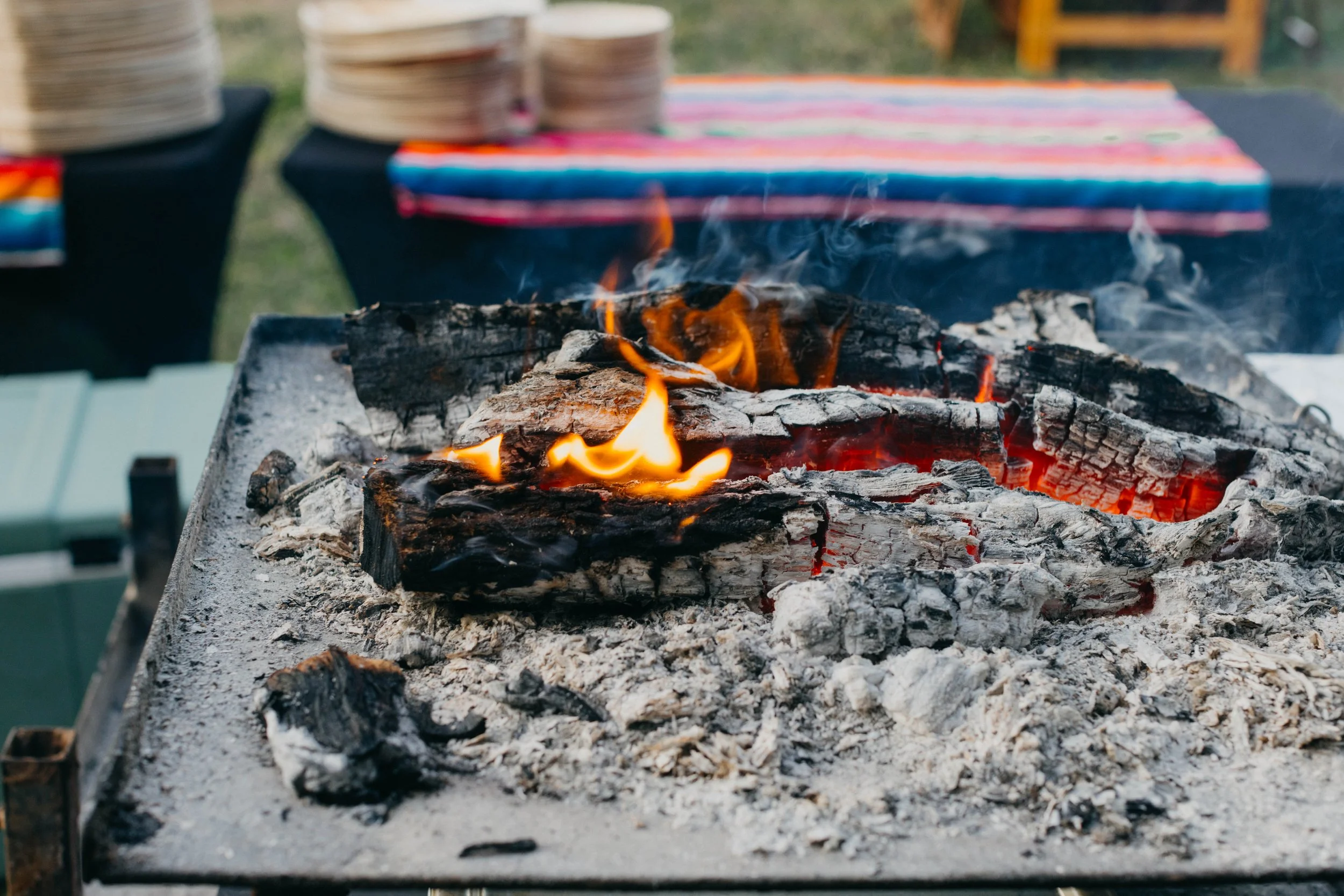
Working with our favorite live fire cooking expert, Chef David DeLeon has given me a glimpse into a vision of what that could look like. The practice of live fire cooking involves starting early, kindling and caring for a fire that will provide lasting embers over which to cook and to share the process of creating not just fuel, but food. Whether it’s carne or cabbage, chicken or calabazas, there is an almost mystical transformation that happens over the low slow fire. A wonder that we get to behold as proteins brown and sugars caramelize. A shared labor that provides a better sauce than we could make out of any substance. Anticipation and reward. The lowly and lovely thing about being a creature is that we must eat, but that we get to delight in it.
We are excited to partner with Chef David to learn the art of slow cooking over embers, and we invite you to join us as we all grow together while learning an age-old skill. I don’t think it’s overstating things to say that cooking, life, working, playing, are most fulfilling when we share them in relationships. We hope that, using the skills and techniques and practices that we learn from our live fire classes, that we can help create a rhythm, however frequent or infrequent, that gives us time to share the things that really matter to us with the people we love. Creating time and space to talk, share, and carry one another is surely a goal worth pursuing. Or should I say, to echo my own words, let’s stop putting our attention so much into to getting past x, and point ourselves toward embracing our limitedness and rest in the fact that we aren’t valued because of what we produce, but rather for who we are. What we get to give to the people we get to love. Let’s try and fail and try again to move toward the Good, the True, and the Beautiful.
-Eric Nystrom
Culinary & Hospitality Director
Elmwood Farm
